Author: Federico García Lorca
setting
- Bernarda’s house during and after her husband, Antonio María Benavides’, funeral
- The beginning of eight years of mourning
characters
- Bernarda Alba
- Harsh, controlling matriarchal dictator
- Tension: tradition versus modernity
- Pepe el Romano: main love interest
- 25, best looking man in town
- Intent on marrying Angustias
- Adela: youngest daughter
- Rebellious
- Martirio
- Magdalena
- Poncia: servant
- María Josefa: Bernarda Alba’s mother
- Crazy, wants to get married
plot
- The servants, then the daughters, discuss Bernarda’s tyranny
- Town gossip, emphasis on tradition and shaming those who are not “proper”
- The girls learn of Pepe’s plan to marry Angustias
themes
- Continuation of tradition
- Circular time
- Internalized misogyny
- Societally imposed gender roles
- Control
- Classism
- The commodification of image
- Freedom
- Spinsterhood is inevitable
- Women who don’t want to be inside the house
- Women not being married
- A woman’s place in the home
- Sexual behavior of Spanish women
- Repression
- Lack of fullfilment
- Closely related to gay people in Spain
symbolism
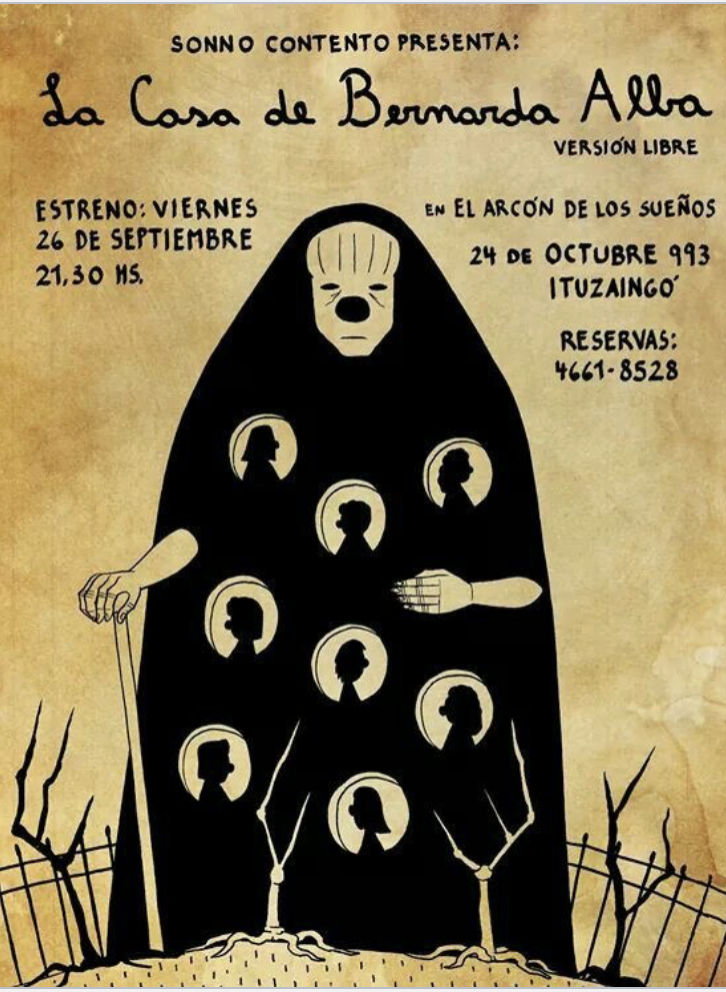
- Stick: represents power and control
- Strong movements of fascist dictatorship
- Windows: passage into another world
- Still barrier
- Women
- Adela
- Rebellion
- At child-bearing age, yet still single
- Desire for liberation from tradition
- Paca la Roseta
- Outsider
- Loose woman
- Class issue
- Free
- Sexuality
- Ridicule and envy of freedom
- María Josefa
- Idealization of marriage
- “Expiration”
- Seashore: water, freedom
- Fulfillment of desires
- Bad influence
- Lock up: wartime treatment of those who think differently
- Adela
- Colors
- Green
- White (Alba)
questions and discussion
- Can the daughters truly be free from oppression after leaving the house?
- What are “topics and issues people are afraid to address” in the first act?
- Sexuality, gender roles
- Class issues
- How religion affects image (Catholicism)
analysis
The House of Bernarda Alba Act I.pdf
- Stage direction (5)
- Frozen in time (🔗 One Hundred Years of Solitude)
- Bells
- Interior
- Repetition
- Frozen in time (🔗 One Hundred Years of Solitude)
- “A drama of women in the villages of Spain”
- Realist to show truth
- “A needle … for men” (21)
- Women inside
- Men outside
- Emphasis on class
- “In the eight years … cutting out sheets” (21)
- Tradition imposed
- Not followed freely
- It’s still the father and grandfather’s house despite them having passed already
- “It gave me … men’s conversation” (25)
- Afraid of daughters being exposed to new ideas by outsiders
notes
“A needle and thread for women. A whip and a mule for men.” (21)
background
- The Rural Trilogy
- Bodas de Sangre (Blood Wedding), 1932
- Themes
- Impossible love
- Oral culture
- Imitate ways of speaking
- Ancestral myths of the Andalusian land
- Popular culture, not high culture
- Symbolism of life and death
- Knives
- Razors
- The moon (🔗 18 The Moon 🜄♃♆)
- Birth
- Death
- Horses
- Orange blossoms
- Spain = land of oranges
- Creation of new life
- Running water (🔗 00 cups - water 🜄)
- Stagnant = death
- Running = new life, freedom
- Successful in Spain and US
- Themes
- Yerma (Barren), 1934
- Lack of women’s rights
- Lack of fulfilment
- Repression of feelings and emotions and social pressures
- Fertility vs. infertility
- Concept of honor
- Modernization through his plays
- Forces people to do things
- Cannot divorce despite wanting a child (her husband is infertile)
- Why expecting loyalty and babies at the same time?
- What is honor?
- Dependent on time and perception
- Legal definitions
- Examples
- Killing wife and lover
- Lack of women’s rights
- Bodas de Sangre (Blood Wedding), 1932
- Directly related to situation in Europe
- Finished manuscript June 19, 1936
- “Intended to be a photographic documentary”
- Spanish Civil War (1936 – 1939)
- First performed in Buenos Aires
- Performed in Spain after dictatorship ended
- 30 years later
- Performed in Spain after dictatorship ended
related
- Can writers do justice to stories that are not their own?
- If there is no love, there can only be death